
| |
Today, neck, lower back, and thoracic disc herniations are among the common health problems that negatively affect many people’s quality of life. The size of the herniation and the pressure it places on the nerves can lead to complaints such as pain, numbness, and restricted movement. In these cases, patch therapy is one of the modern methods that can be used without the need for surgery.
What Is Patch Therapy?
Patch therapy is a non-invasive method used for patients with large disc herniations that do not require surgery. It aims to relieve pressure on the nerve by reducing swelling in herniations located in the neck, lower back, or thoracic region. It is often preferred for cases commonly referred to as a “ruptured disc,” which present with severe pain.
In this method, a special gel-containing patch is applied over the herniation. The gel is made entirely of natural, plant-based ingredients. The gel, which comes into contact with the herniated area, helps reduce the swelling and shrink the herniation. If we think of the herniation as a water-filled balloon, reducing the water helps the herniation shrink and relieves the pressure on the nerve. This leads to a noticeable improvement in complaints such as pain, numbness, and tingling.
Patch application is used as a first-line option especially in cases that do not require surgery, and in some patients a single session can completely resolve the complaints. If needed, it can be supported with a second application or additional injection treatments.
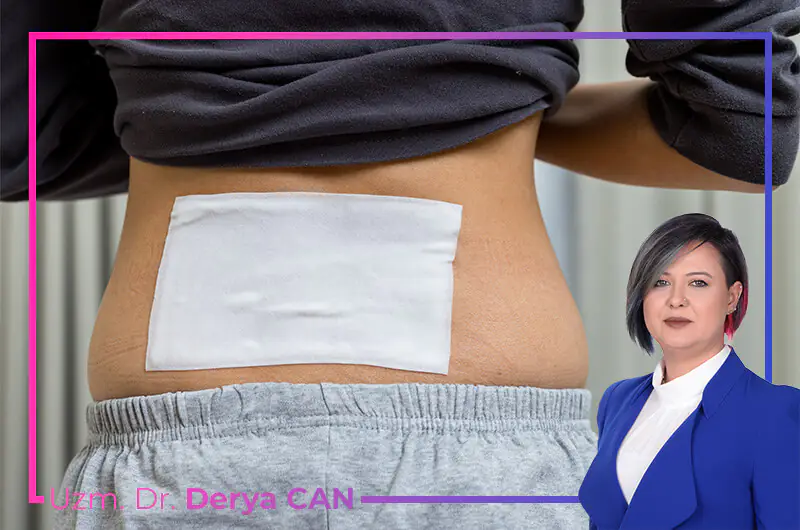
Benefits and Effects of Patch Application
Patch therapy is an effective method for relieving pain and discomfort in patients with disc herniations, without the need for surgery. Thanks to its non-invasive nature, it reduces nerve pressure caused by large herniations in the neck, lower back, and thoracic region, making daily life easier for patients. Its main benefits can be listed as follows.
- Reduced Pain: By relieving the herniation’s pressure on the nerve, patients typically feel noticeable relief from pain and discomfort within a short time.
- Relief from Numbness and Tingling: Reduced nerve pressure decreases numbness and tingling in the arm or leg.
- Reduced Swelling and Herniation Shrinkage: The special gel reduces swelling in the area of the herniation and helps it shrink.
- Quick Return to Daily Life: Patients can usually return to their daily activities within a short time; extended bed rest is not required.
- An Alternative to Surgery: It offers an effective solution even for large herniations, without the need for surgical intervention.
The effect of patch application varies depending on the patient’s overall condition and the size of the herniation. Most patients experience noticeable relief after the first application. When needed, a second session or additional injection treatments can provide longer-lasting benefit.
Patch Application Process and Gel Properties
Patch is a non-invasive taping method specifically developed to reduce disc herniation complaints. Although the process seems simple, correct application and the patient’s positioning are of great importance for the effectiveness of the result.
Application Process
- Preparation: The area with the herniation is cleaned and the gel-containing patch is prepared. It can be applied to the neck, lower back, or thoracic region.
- Placing the Patch: The special gel is placed over the area with the herniation. The gel is made entirely of plant-based, natural ingredients and has a swelling-reducing effect.
- Positioning: The patient is asked to remain lying on their back or front for 24 hours. During this time, the gel stays in contact with the herniated area, helping reduce swelling and shrink the herniation.
- Removal and Check-Up: After the 24-hour application, the patch is removed and the patient’s condition is assessed. In some patients a single application is sufficient, while in others support can be provided with a second session or injection treatments as needed.
Gel Properties
- Natural and Plant-Based: The gel inside the patch is made entirely from plant-based ingredients and has minimal side effects.
- Swelling Reduction: The gel reduces swelling in the area of the herniation, relieving pressure on the nerve.
- Targeted Effect: It is applied directly over the herniation, reducing swelling and helping it shrink.
Thanks to patch therapy, pain and discomfort can be reduced without the need for surgery. As pressure on the nerve from the herniation decreases, patients’ daily comfort improves rapidly.
Who Is Not Suitable for Patch Therapy?
Patch can be safely applied to most patients with disc herniations. However, in some cases it may not be suitable, and surgical intervention may be required.
Situations Where Patch Application Is Not Used
- Weakness and Nerve Damage:
If the patient has developed weakness in the arm or leg, or has reached a point where they cannot control bladder or bowel function, this generally indicates that the herniation is placing severe pressure on the nerve. In this case, Patch is insufficient and urgent surgical intervention is required. - Symptoms That Have Developed Rapidly in the Last 1–2 Months:
If the patient has developed weakness in the toes or fingers, especially within the last 1–2 months, Patch is not recommended. This is because the nerve tissue may already be damaged, and the herniation needs to be surgically removed quickly. - Pre-Existing Urinary or Bowel Problems:
Patch is not applied to patients who already have urinary incontinence or bowel control issues. These conditions are generally a sign of serious pressure on the nerve.
Warnings
- Patch is only effective in cases that do not require surgery.
- Delaying treatment in patients with weakness or severe nerve compression can lead to permanent nerve damage.
- Even if pain and numbness are severe, Patch can be safely applied as long as nerve function is preserved.
What to Watch for After Patch Therapy and Daily Life
Patch is an effective method for reducing disc herniation complaints; however, following the right practices afterward improves its success and reduces the risk of complications.
What to Watch for
- Positioning and Rest:
Bed rest is recommended for the first 24 hours following patch application. During this time, the gel stays in contact with the herniated area, helping reduce swelling and shrink the herniation. - Avoiding Strenuous Physical Activity:
For a period after application, heavy lifting, sudden movements, or strenuous exercise should be avoided. This prevents the herniation from putting pressure on the nerve again. - Driving and Daily Movement:
Especially for patients with a cervical (neck) herniation, using a neck brace while driving or on long trips is recommended. Even a small impact can cause the herniation to enlarge and lead to weakness in the arm or leg. - Exercise and Massage:
Exercise or massage is not recommended during the first 2–3 weeks. A small awkward movement can cause the herniation to enlarge. Light exercises can be started under a doctor’s supervision at a later stage.
Daily Life
- After the patch is removed, patients can generally return to their daily lives.
- Once pain and discomfort have decreased, light walking or simple daily activities can be resumed.
- If complaints have not fully resolved, a second Patch session or injection treatments may be planned.
- Regular follow-up optimizes the process and reduces the risk of the herniation recurring.
Proper care and careful movement after Patch application improve the treatment’s effectiveness and minimize the likelihood of needing surgical intervention.
Patch offers an effective, surgery-free solution particularly for the pain, numbness, and restricted movement caused by large herniations. Applied directly over the herniated area, the special gel-containing Patch reduces swelling, helps the herniation shrink, and relieves pressure on the nerve.
Afterward, patients can generally return to their daily lives within a short time and experience a noticeable improvement in their complaints. Patch therapy can be sufficient on its own in suitable patients, and when needed, it can be supported with a second application or injection treatments. With regular follow-up and proper application, bringing disc herniation complaints under control without surgical intervention is possible.
Medical Review:
The information on this page has been prepared based on scientific medical sources. It has been read and medically reviewed by Dr. Derya Can (Traditional and Complementary Medicine Physician), and published under physician supervision. This content is an informational resource intended to provide reliable health information. — Certifications · Publications
The information on this page has been prepared based on scientific medical sources. It has been read and medically reviewed by Dr. Derya Can (Traditional and Complementary Medicine Physician), and published under physician supervision. This content is an informational resource intended to provide reliable health information. — Certifications · Publications